
Community
Designers share their memories of Rowena and how her teachings helped shape how they see and interact with the world

Read Viemeister
BID
|
1943
Read Viemeister began Pratt in 1940. When he and his pal, Budd Steinhilber graduated in 1943 they went to work for their teachers Donald Dohner and Walter Lippincott where the helped design the Tucker car in 1947.
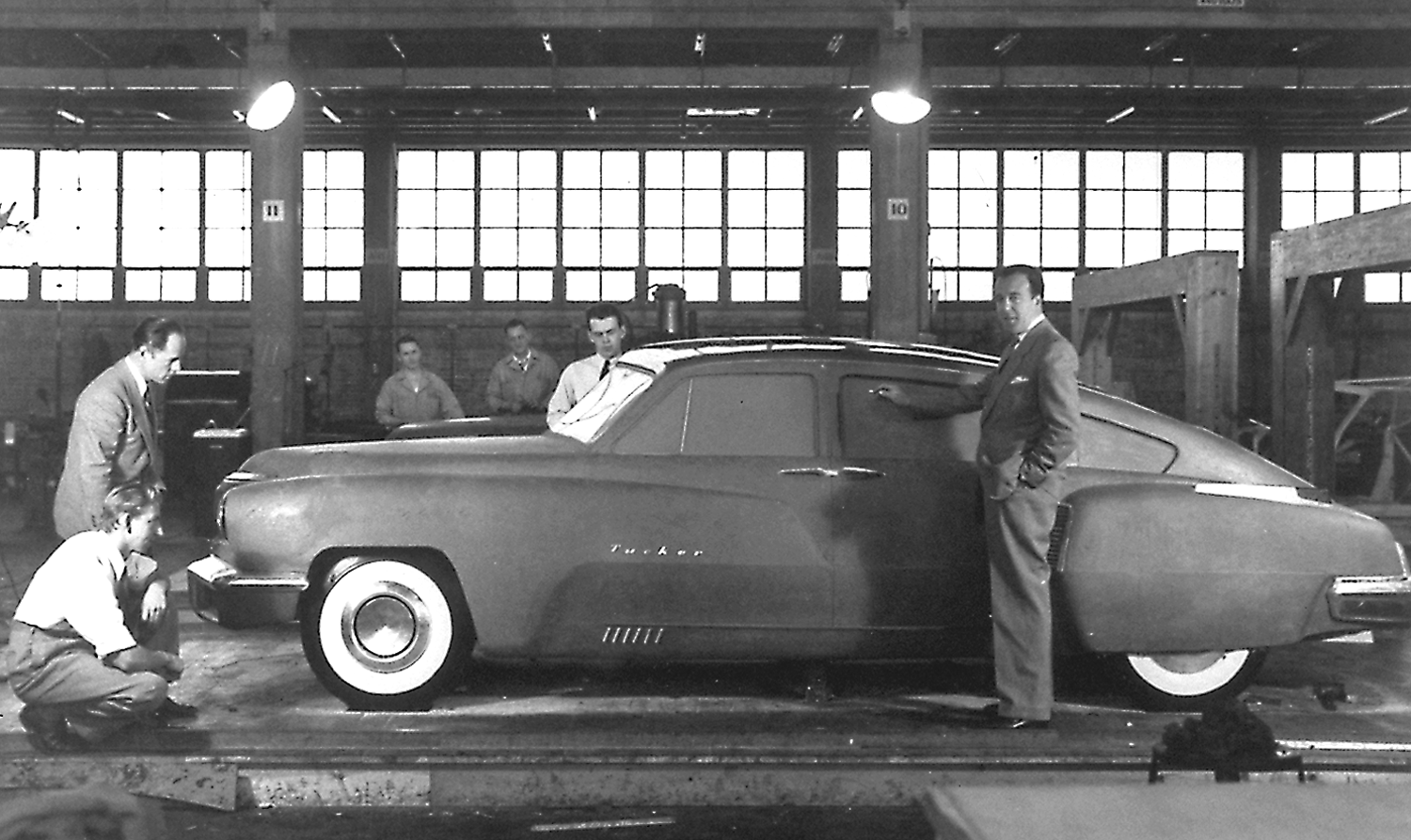
Tucker Automobile prototype in clay (1948)
Tarik Currimbhoy
BID
|
1990
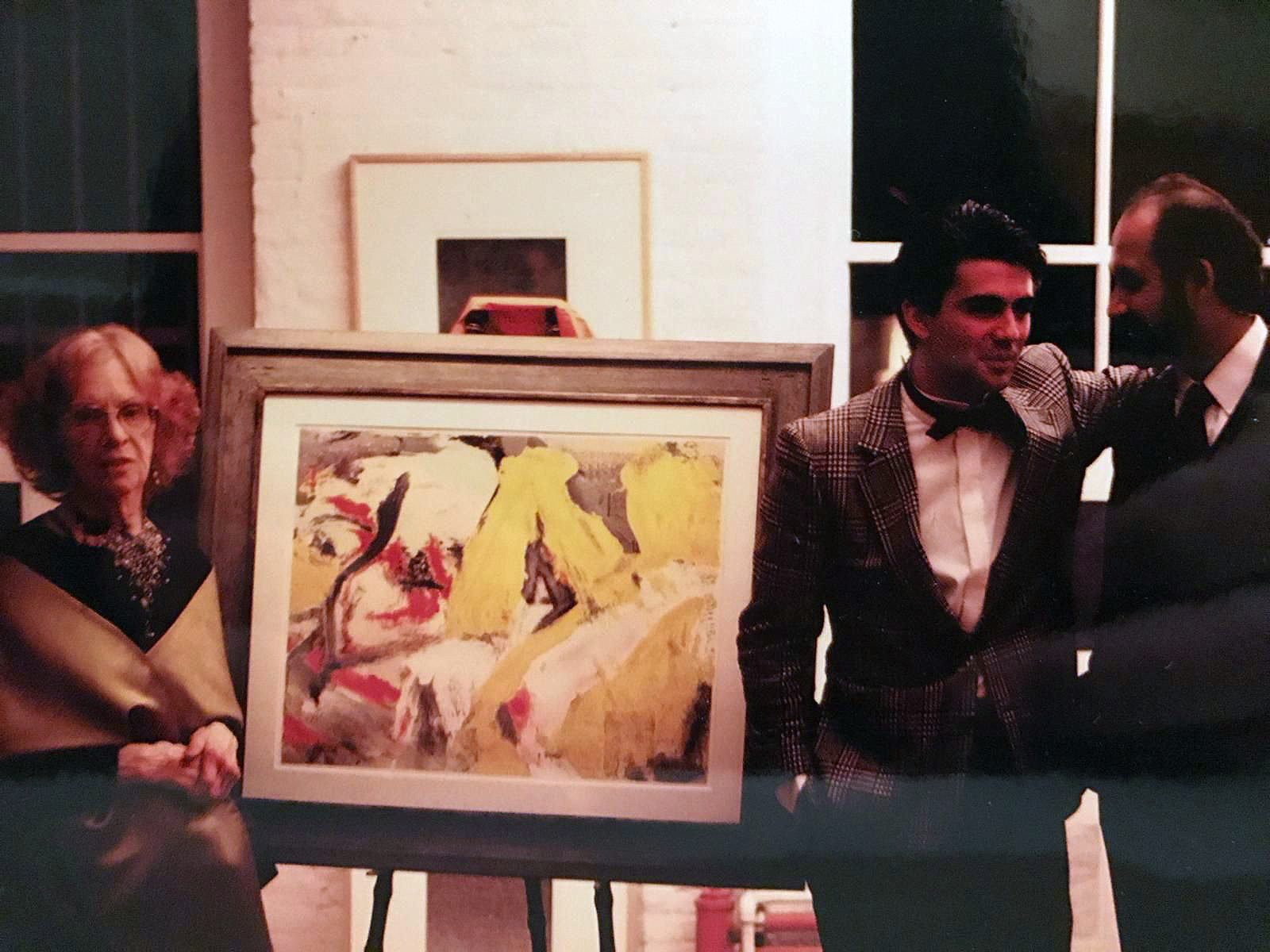
That’s Rowena to the left of the de Kooning. To the right is René Bouchara, and that’s me with the beard. How time goes by. Photo shot by Simon Hamui — both René and Simon are Rowena Award recipients. This was at my friend Dolly’s studio in Soho near Rowena’s Greene Street apartment. The show was “William de Kooning’s 70th birthday.” Both Dolly and I took part. Sculpture show in Central Park, Sheep’s Meadow.
Yvette Chaparro
MID
|
2009
I was taught the teachings of Rowena Reed Kostellow at Pratt during my Master of Industrial Design. Jay Levy was my teacher, and in his class we went through the different problems devised by Rowena to understand and apply formal relationships. In my last semester, I served as Linda Celentano’s teaching assistant, as we would not undertake the convexity problem in the Master’s program, she directed me to make my convexity as part of my assistantship in her class. The experiences with these two professors ignited my interest in formal relationships and how Industrial Designers engage in this knowledge. My research and formal exploration has developed in this direction especially in the area of families of objects.
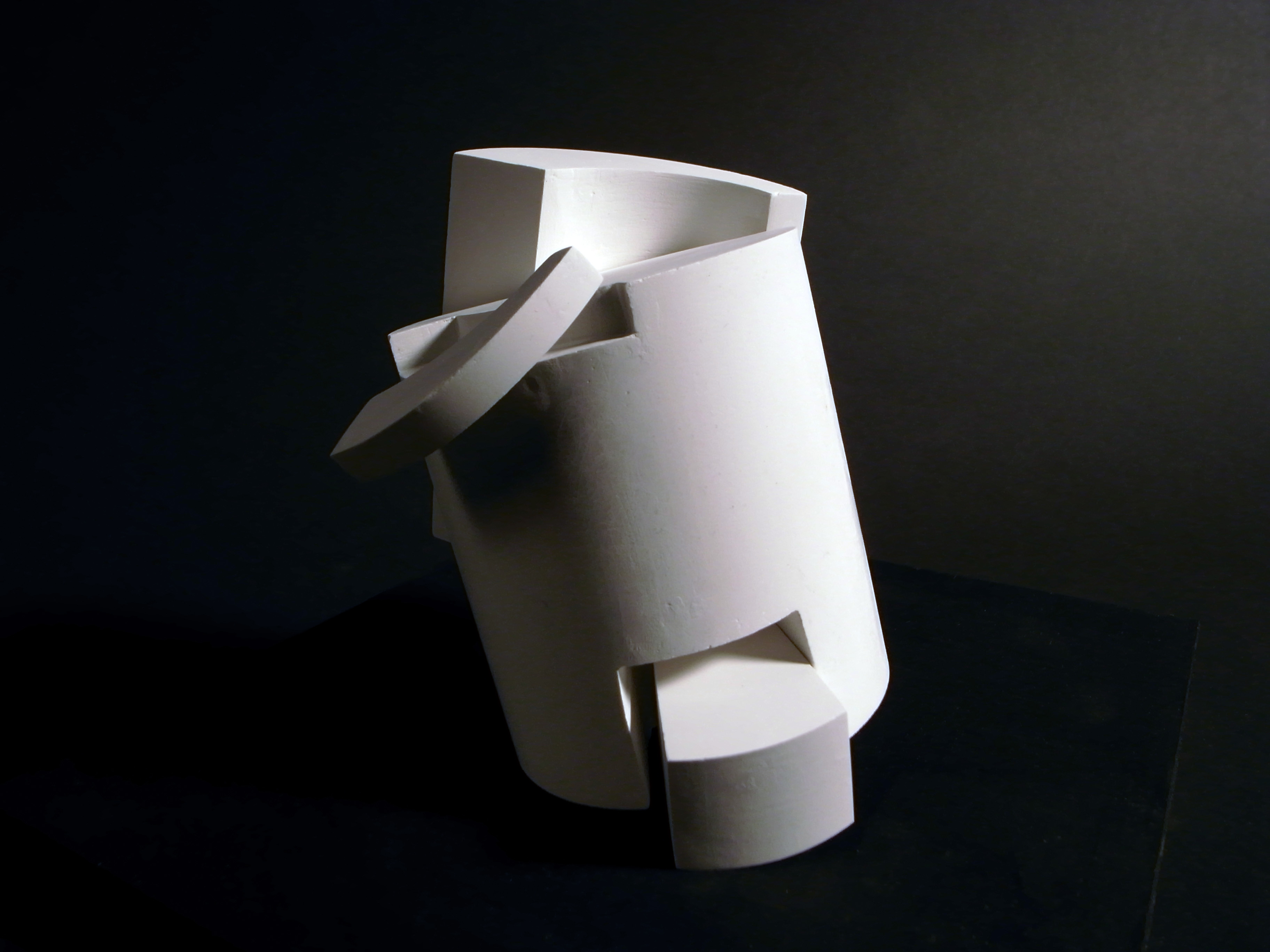
Chaparro, Y. (2008). Fragments problem [Photograph of 3D artifact]. 3D-Class with Jay Levy, Pratt Institute, Brooklyn, NY
Thank you! Your submission has been received!
Oops! Something went wrong while submitting the form.